Showing posts with label Patrick Larkin. Show all posts

Thursday, June 20, 2013

Day 150 - Patrick Larkin, Assistant Superintendent

A Four Minute Video On The 2013 K-12 Horizon Report:


The New Media Consortium (NMC) has just released its fifth Horizon Report for K-12 education. As it has done in each of the previous four years, the report "examines emerging technologies for their potential impact on and use in teaching, learning, and creative inquiry within the environment of pre-college education." (via NMC.org)

The video above is a short synopsis of this year's report highlighting the six technologies to watch in 2013. The technologies cited are -

  1. Cloud computing
  2. Mobile learning
  3. Learning anayltics
  4. Open content
  5. 3D Printing
  6. Virtual and remote labs
The video also explains the three adoption horizons:
  1. near-term (12 months)
  2. mid-term (2-3 years)
  3. far-term (4-5 years)

The report is a great guide for schools to see where they stand in regards to staying current with technology planning. You can get the entire report here.

Enhanced by Zemanta

Friday, May 17, 2013

Day 124 - Patrick Larkin, Assistant Superintendent

Do You Have Any Idea What Your Kids Are Posting Online?:


I have spent a fair amount of time lately checking out the activity of some students and what they are posting online.  I am interested in the behavior of my kids online and the kids that they associate with. I have also spent time checking out the social media behaviors of a few other middle and high school aged relatives as well as some students in Burlington. As I read these Twitter posts (aka Tweets), Instagram posts, and Facebook posts I am certain that the parents of these kids are not aware of the conversations that their children are having online.  

Before I cite the negative uses of social media I am seeing, I want to say that most of the communication I see online from students is appropriate. However, I have seen examples of elementary students poking fun at classmates and using profanity, I have seen middle school students using inappropriate language, and I have seen high school students make posts using sexually suggestive language and also use a great deal of profanity.

I have a few areas of concern when it comes to this "over-sharing" that is happening online. What I mean by "over-sharing" is that these young people are sharing too much information online.   Either they do not know that the things that they post are accessible to anyone on the internet and can be copied with a quick screen shot or they don't care. My experience tells me that it is a bit of both with younger students being a bit clueless to how things work and the older students being a bit more carefree about it (although many are also clueless).

Of course the simplest solution is for our kids to understand that the boundaries for responsible communication do not change whether you are face-to-face, on the phone, texting, tweeting, posting, etc.  But while we continue to promote respectful behavior, how can we get parents more in the loop?  Our kids have a lot more avenues for communication than we did as parents and that is not all bad. However, I think we have an obligation to get to know all of the places that are students spend time whether they are physical spaces or online spaces. 


One of the most popular social media resources with my own kids and a lot of their friends right now is Instagram.  I know that it is also popular in Burlington and we have students at every grade level using it. As we plan for our final Parent Technology Night in June, I want to share some resources below that provide a great overview of Instagram for parents.

Here’s what parents need to know:
  • Users officially need to be 13 and older to start an Instagram account. I do recommend enforcing this rule at home because I’m not entirely convinced that younger kids are mature enough to use these kinds of social media applications.
  • Lay down some ground rules, and stress that if the rules are broken it is cause for immediate account deletion.

    Our rules are:
     
  1. Only follow people you know personally. (This might be tricky, because user names are sometimes “TeddyBear456”.)
  2. Never share any personal information about yourself, where you live and go to school. 
  3. Don’t use geolocation services near personal landmarks, namely, home and school. In other words, turn off the option that allows others to know the exact location from where you’re publishing your photo.
  4. Never publish anything you wouldn’t want your parents, teachers, and grandparents to see. Photos can be shared widely, with anyone, in a matter of seconds.
  5. Practice the golden rule and treat others as you would like to be treated when you’re using Instagram. T.H.I.N.K. before you comment on a friend’s photo: is it True, Helpful, Inspiring, Necessary, Kind?
  6. Do not upload or tag photos of other people without their permission. If you snap a photo of your friends, always ask them before sharing it on Instagram.
It’s also good idea to make your child’s account private, otherwise anyone signed into Instagram can view photos on a public user's profile (which is easily accessed at www.instagram.com/username).
As a parent, my job is to:
  • Follow my daughter on Instagram.
  • Peek at her photos and leave comments on the ones I really like to encourage those creative efforts and keep the juices flowing.
  • Check the comments on her photos every once in awhile and see who’s following who.
  • Chat about the activity on her account every once in awhile together. e.g. “Did you see that great photo that your friend TeddyBear456 posted?”  
That subtly lets her know that I’m in the loop, and a pretty hip mama to boot! (Ha ha.) Are you on Instagram? Are your kids? Do you have guidelines at home? 


Related articles
Enhanced by Zemanta

Tuesday, May 7, 2013

Day 116 - Patrick Larkin, Assistant Superintendent

5 Ways For Teachers To Get Quality PD This Summer: This post first appeared on Edudemic.


1. Attend (or start) a summer Edcamp


For the third consecutive summer, our district will host an Edcamp each Tuesday morning in Burlington, MA. These informal sessions are open to educators from Burlington and beyond who feel like gathering to lead their own learning. Attendees assemble each week and decide what topics will be the focal point for their learning. We provide members of our Instructional Technology staff (including our high school students) to support those looking to expand their skills with technology integration. In addition, teachers from Burlington can earn in-service credits or Professional Development Points for their attendance.
This model could be replicated anywhere! All you need to do is pick some dates, provide a space, and invite local educators. Trust me – if you plan it, they will come.

2. Attend A Multiple-Day Workshop


Most of the teachers whom I know hate taking one day off from their classroom during the school year, and they would never consider missing consecutive days for a workshop of any kind. The amount of additional advanced planning, combined with the time away from their students, is just too much for these folks to bear! Well, there is no time better than the summer months to escape the guilt of missing a day of school and treat yourself to a quality learning opportunity with educators and taught by other educators. Check out the summer-long list of workshops offered by EdTech Teacher’s staff of classroom practitioners.

3. Massive Open Online Courses (MOOC)

The beauty of a Massive Open Online Course (MOOC) is that most of the learning opportunities can be done regardless of time and place. You can choose what you learn, when you learn, and where you learn. If you are anywhere with a wireless signal, and you want to try the MOOC experience, then your only dilemma is choosing from the extensive list of options out there.  A great place to begin your search is at www.mooc.ca, a comprehensive list of MOOC’s maintained by Stephen Downes.
If you are looking for a less intimidating option, you could also enlist a group of colleagues and run through the some of the topics from the educational-technology focused #ETMOOC which ran between January and March of this year. The important part here is to find a space where passionate educators can find a topic of common interest and share their learning journey regardless of space or time.

4. Participate in a Weekly Twitter Chat

If you are an educator, then there is a Twitter chat for you. Check out this awesome Google Spreadsheet of Twitter chats broken down by nights of the week that was created by@thomascmurray and @cevans5095.  There are literally chats for every grade level and discipline that you could imagine. My suggestion would be to speak to your district or building administrator about earning credits towards recertification for your participation (in MA we call these credits Professional Development Points). You could use storify to archive your participation in the chats and incorporate your tweets into a reflective blog post to provide documentation of your learning.
If you need help getting started with Twitter, check out Erin Klein’s great video that appeared on Edudemic last week.

5. Just Hang Out


If you haven’t experienced the capabilities in a Google+ Hangout, you are missing out! Check out the schedule of Education On Air sessions that is available to educators for free learning opportunities. Educators could also create their own hangouts for colleagues to discuss a pertinent topic, collaborate on curriculum work, or even do a book discussion. The possibilities are literally endless, and the hangouts allow you to record the sessions to have for future reference. At the very least, I encourage you to try a hangout with one or two friends to see how easy it is to set up and utilize the numerous built-in functions.
Given all of the avenues available for professional development, 2013 could be the best summer ever! What a great time to take advantage of these opportunities to advance your own learning!


Enhanced by Zemanta

Thursday, May 2, 2013

Day 113 - Patrick Larkin, Assistant Superintendent

Some Thoughts On Ed. Reform...: One of the best pieces I have read on the education reform agenda in our country appeared in The Atlantic a couple weeks ago.  The article, titled The Coming Revolution in Public Education, was written by John Tierney, a former professor and independent school teacher.  

As a father of three chidlren in the K-12 public school system, I wonder how others feel about the direction of our country's education reform efforts.  It is understandable that a reform agenda that capitalizes on  a scoreboard that tells us which schools (and teachers) are "winning" and "losing," would be appealing due to its simplicity. Unfortunately, there is no simple solution to the current issues that our nation's schools face and any effort to make it seem otherwise are misguided.

Here are a few excerpts from Tierney's piece that should cause us all to reflect a bit on the current education agenda:
  • Policies that aim to reduce variability by reducing teacher discretion not only preclude learning from situational adaptation to policy goals, they also can impede effective teaching."
  • As The Nation magazine reported in 2011: "The research consensus has been clear and unchanging for more than a decade: at most, teaching accounts for about 15 percent of student achievement outcomes, while socioeconomic factors account for about 60 percent."
  • ...these companies (driving ed. reform efforts) are enriching themselves and their executives from taxpayers' dollars - Pearson's pre-tax profits soaring by 72 percent in 2011. 
  • If you want to read a detailed and damning appraisal of the secretive and error-ridden testing business, read this 2003 report by Kathleen Rhoades and George Madaus of Boston College's Lynch School of Education. 
  • David Sirota has reported, "The reason America's overall scores on such tests are far lower is because high poverty schools produce far worse results -- and as the most economically unequal society in the industrialized world, we have far more poverty than our competitors, bringing down our overall scores accordingly." Addressing poverty and inequality are the keys to serving America's educational needs. 
Enhanced by Zemanta

Tuesday, March 12, 2013

Day 92 - Patrick Larkin, Assistant Superintendent

An Amazing School In The UK:

I had the chance to spend the day at an amazing school in the United Kingdom yesterday in Bolton which is just outside of Manchester. The School, Essa Academy, has been making some news for its use of iPads and was recently featured on the BBC. There is also a profile of the school on the Apple website.

While all of this is nice, the thing that makes Essa Academy so impressive is the student-centered building and of course their most impressive resource, the staff and students inside.


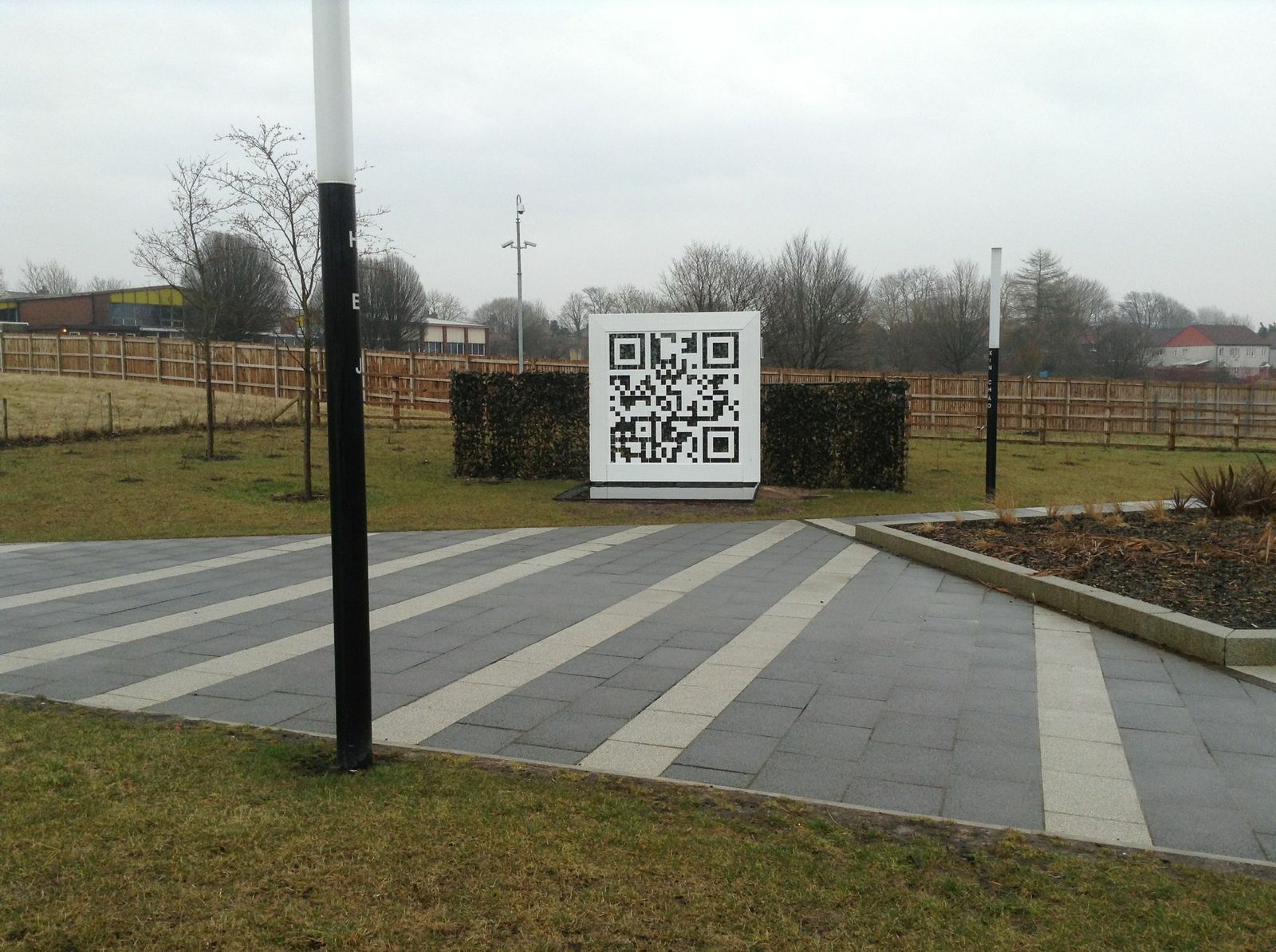
We felt welcomed immediately upon arrival as we walked down the pathway to the entrance and saw welcomes written on the light posts in a number of different languages. We were also impressed with the large monument of a QR code out in front of the school that directed us to the Essa Academy website.


The first thing you see when you enter Essa Academy is the dining area. It is seen as an important gathering space where students and staff share meals and spend time socializing together. When students enter in the morning the first thing they see is their teachers sharing a breakfast and talking to one another.

Interestingly, this is the only place in the school where community members eat. There is no separate dining area for staff.


In addition there are no departmental meeting spaces. All of the teachers share this large community space to get work done and collaborate.


I loved the science labs which featured these large windows so that others could look in and see the learning happening in the lab. Students are also encouraged to use the windows as a board to write formulas and brainstorm solutions to tasks.


The classroom spaces are very different from traditional schools in the fact that there is no teacher desk or whiteboard at the front of the room that is the focal point of students. Students work together in groups on different challenges and it takes some time to figure out who the teacher was. The spaces were clearly designed to focus on learners not teachers.


While I wouldn't have thought much about the lockers other than the fact that they are more colorful and smaller than what I am used to seeing, the thing that I found interesting was that these were also the spaces where teachers stored their belongings.


It was really a joy to see a school built in 2009 that was designed with a student-centered vision! I hope other communities that are fortunate enough to build new schools are as thoughtful as the folks at Essa Academy.

Tuesday, January 22, 2013

Day 64 - Patrick Larkin, BPS Assistant Superintendent

Are You Sure Your Child Isn't Using Social Media?:

The following is a post from Patrick Larkins' blog, "Learning in Burlington".


Are You Sure Your Child Isn't Using Social Media?

What Apps Is Your Child Using?

Just because your child does not have a Facebook or Twitter account does not mean they are not using social media resources. I have been hearing rumblings from various communities (including Burlington) about elementary and middle school-aged children making poor choices with social media resources. I am certain that in many cases that the parents of these kids are unaware that their kids are over- sharing personal information, posting and viewing inappropriate pictures and having inappropriate conversations with friends AND STRANGERS. 

The bottom line here is that parents need to check on every app that their children are adding to their iPod, iPad, iPhone or other web enabled device, We have moved so quickly from the days when our biggest web-based concern regarding our children was a desktop computer in a common area of our homes. As we are well aware many of the gadgets that they  carry in their pockets can do so much more that those desktops could ever do. With new social media apps  and websites coming onto the scene at breathraking pace,  it is not surprising that parents can't keep up

A Little Advice For Parents: read on.....

http://www.patrickmlarkin.com/


To read more about this topic, please connect to Assistant Superintendent Patrick Larkin's blog "Learning in Burlington"  for some great advice. 


Enhanced by Zemanta

Wednesday, October 31, 2012

Day 21 - Patrick Larkin, Assistant Superintendent for Learning


It is hard to believe that I am entering my sixth year in Burlington! Moving to my new post in central office this year has certainly brought a new set of challenges as I am feeling like the "new kid" who is trying to learn all of the  names and navigate new hallways.   However, there are tremendous learning opportunities available when you step out of your comfort zone and accept a new challenge.  I feel fortunate to have the opportunity to accept this challenge in a place like Burlington where education and educators are supported.

As an administrator and a parent, I am impressed daily by the learning taking place in our schools. While none of us purport to be the perfect educator, there are so many examples of high-quality learning experiences taking place every day. Fortunately for me, I get to see a number of them first hand!

But there is good news for those who can't be in our classrooms each day to witness the happenings. Because more and more of our staff members are sharing a window into their classrooms with blogs and other online spaces, there are opportunities for others to follow along.